

Die drohnengestützte Fassadenreinigung entwickelt sich rasant zu einer der effizientesten und sichersten Technologien für die Instandhaltung von Hochhausfassaden. Viele Unternehmen, die diesen Bereich erkunden, stoßen jedoch schnell auf dieselbe Frage: Wie funktionieren Genehmigungen für Drohnenreinigungsmaßnahmen in Europa und welche Voraussetzungen müssen für einen legalen Betrieb erfüllt sein?
Dieser Leitfaden erläutert die wichtigsten Punkte, ohne die Betreiber mit unnötigen regionalen Unterschieden zu überfordern. Alle nachfolgenden Ausführungen gelten europaweit im Rahmen der einheitlichen EASA-Regulierungsstandards.
Warum für die Drohnenreinigung eine Sondergenehmigung erforderlich ist
Da Fassadenreinigungsdrohnen nahe an Oberflächen, über Arbeitern oder Fußgängern und üblicherweise mit einer angebundenen Wasserleitung operieren, fällt diese Tätigkeit unter die Kategorie Spezifische Kategorie. Das bedeutet, dass Unternehmen sich beschaffen müssen Drohnenreinigungsgenehmigungen vor Beginn des kommerziellen Betriebs.
Im Gegensatz zu Hobbyflügen beinhalten Reinigungsmissionen Folgendes:
- Nähe zur vertikalen Oberfläche
- Eingeschränkte, aber komplexe Bewegung
- Tether-Integration
- Koordination des Bodenpersonals
Diese Faktoren lösen die Notwendigkeit aus für Drohnenreinigungsgenehmigungen und eine formale Risikobewertung.
Die Kernanforderung: SORA
Die Grundlage von allem Drohnenreinigungsgenehmigungen Ist SORA (Spezifische operative Risikobewertung).
Ein SORA-Beispiel zeigt:
- Wo und wie die Drohne fliegen wird
- Welche Risiken bestehen für Menschen, Eigentum und den Luftraum?
- Wie diese Risiken auf ein akzeptables Niveau reduziert werden
- Welche Notfallmaßnahmen stehen zur Verfügung?
- Wie Bodensystem und Drohne sicher interagieren
Kabelgebundene Reinigungssysteme haben oft einen Vorteil bei der Anwendung von Drohnenreinigungsgenehmigungen, weil der Vorgang begrenzt, vorhersehbar und physisch mit dem Boden verbunden ist.
Für Drohnenreinigungsgenehmigungen benötigte Dokumente
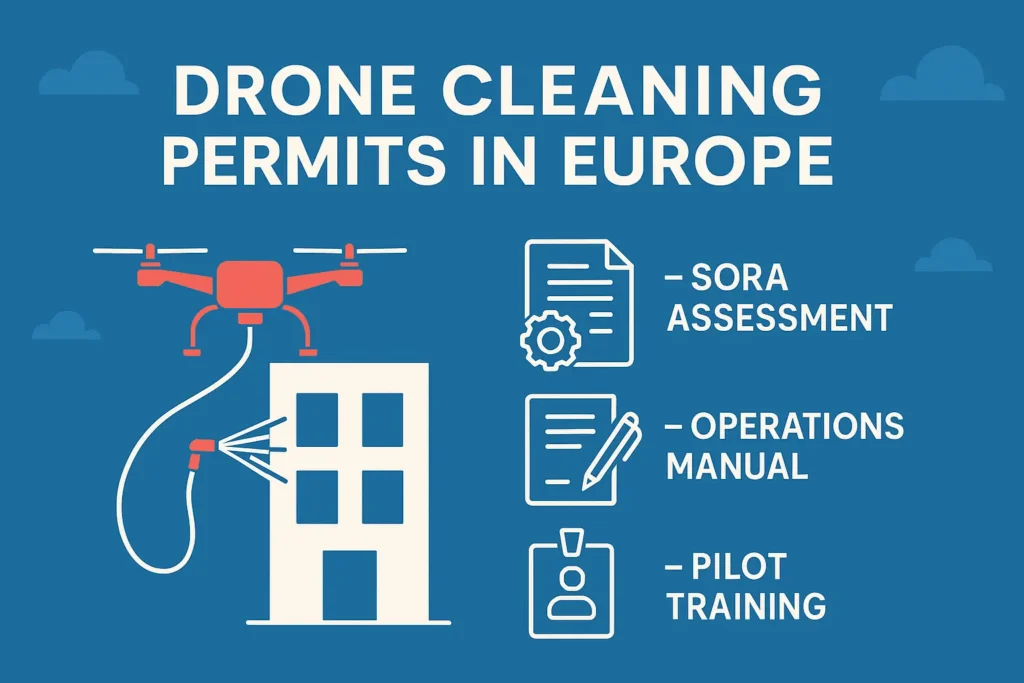
Um zu erhalten Drohnenreinigungsgenehmigungen, Die Betreiber erstellen ein standardisiertes Dokumentationspaket, das im Allgemeinen Folgendes umfasst:
• Einsatzkonzept (ConOps)
Ihre vollständige Missionsbeschreibung: Standorttypen, Reinigungshöhen, Teamrollen, Gerätefluss.
• Betriebshandbuch
Standardverfahren, Notfallmaßnahmen, Wartungsregeln und Sicherheitschecklisten.
• SORA-Dokumentation
Risikoanalyse, Risikominderungsmaßnahmen, Gefahrenidentifizierung und Einhaltung der erforderlichen Sicherheitsstandards.
• Versicherungsdokumentation
Für gewerbliche Reinigungsarbeiten ist eine Haftpflichtversicherung erforderlich.
• Pilotenbefähigungsnachweise
Schulungsnachweis für die Person, die die Drohne steuert.
Diese Dokumentation ermöglicht es den Behörden, die Dokumente zu überprüfen und entsprechende Anordnungen zu erlassen. Drohnenreinigungsgenehmigungen effizient.
Vorteile von kabelgebundenen Systemen im Genehmigungsprozess
Bei der Überprüfung von Reinigungsplattformen weisen die Behörden häufig auf deren inhärente Sicherheitsmerkmale hin. Drohnenreinigungsgenehmigungen:
- Die Drohne kann nicht weit von der Fassade abdriften.
- Das Fluggebiet wird streng kontrolliert
- Notlandung ist unkompliziert
- Der Arbeitsbereich lässt sich leicht abgrenzen.
Diese Eigenschaften führen oft zu reibungsloseren Genehmigungsprozessen für Drohnenreinigungsgenehmigungen.
Schulungs- und Sicherheitsanforderungen
Fachliche Kompetenz ist eine Grundvoraussetzung für Drohnenreinigungsgenehmigungen. Die Bediener bereiten typischerweise Folgendes vor:
- Formale Pilotenausbildung
- Systemspezifische operative Schulung
- Koordinierungsverfahren für das Bodenpersonal
- Wetter- und Umweltbewertungsroutinen
Fundierte operative Kenntnisse steigern die Glaubwürdigkeit Ihrer Anwendung und beschleunigen den Prozess. Drohnenreinigungsgenehmigungen.
Wie lange dauert die Bearbeitung von Drohnenreinigungsgenehmigungen?
Die Bearbeitungszeiten variieren je nach Qualität der Dokumentation, aber gut vorbereitete Anträge erhalten oft eine Bearbeitungszeit. Drohnenreinigungsgenehmigungen innerhalb weniger Wochen. Fehlende Dokumente oder unklare Verfahren sind die Hauptursachen für Verzögerungen.
Abschluss
Die Fassadenreinigung mit Drohnen ist gemäß den europäischen Vorschriften uneingeschränkt möglich, sofern die Betreiber die erforderlichen Sicherheitsvorkehrungen treffen. Drohnenreinigungsgenehmigungen. Mit einer soliden SORA (Sicherheitsrisikoanalyse), einem vollständigen Betriebshandbuch und einer klaren Sicherheitslogik können Unternehmen Drohnenreinigungsdienste mit Zuversicht und unter Einhaltung der gesetzlichen Bestimmungen einführen.
Verständnis Drohnenreinigungsgenehmigungen ist nicht nur eine gesetzliche Vorgabe, sondern auch ein Wettbewerbsvorteil für Unternehmen, die in diesen wachsenden Markt eintreten.
Häufig gestellte Fragen: Vorschriften und Genehmigungsverfahren für Drohnenreinigung in Europa
Benötige ich eine offizielle Genehmigung für die Fassadenreinigung mit Drohnen in Europa?
Ja. Alle gewerblichen Fassadenreinigungsaufträge fallen unter die Spezifische Kategorie und erfordern eine formelle Genehmigung zur UAS-Reinigung Ausgestellt von der nationalen Luftfahrtbehörde. Dieses Verfahren gewährleistet die Einhaltung der Fassadenreinigungsvorschriften und Sicherheitsstandards.
Warum ist die Drohnenreinigung in der offenen Kategorie nicht erlaubt?
Die Kategorie „Offen“ ist auf Einsätze mit geringem Risiko beschränkt. Die Drohnenreinigung birgt Risiken wie die Nähe zu vertikalen Flächen, die Verwendung von Wasserleitungen und die potenzielle Gefährdung von Personen am Boden. Diese Risiken erfordern SORA-Konformität und Genehmigung, bevor der Betrieb aufgenommen werden kann.
Was ist SORA und warum ist es für Reinigungsarbeiten erforderlich?
SORA (Spezifische operative Risikobewertung) ist ein obligatorischer Rahmen zur Bewertung operationeller Risiken. Er bewertet:
- Bodenrisiko
- Luftrisiko
- Technische Minderungsmaßnahmen
- Notfallmaßnahmen
Bei kabelgebundenen Systemen ist die Rechtfertigung oft einfacher, da die Bewegung der Drohne eingeschränkt und kontrolliert ist.
Was ist ein Tethered System?
A Kabelgebundenes System ist ein Drohnenbetrieb, bei dem das Fluggerät über einen Schlauch oder ein Kabel physisch mit einer Bodenstation verbunden ist.
Bei Reinigungsanwendungen transportiert das Kabel Wasser, Chemikalien oder Druck vom Bodensystem zur Drohne, wodurch die Notwendigkeit entfällt, schwere Flüssigkeitsmengen an Bord mitzuführen.
Tethering verbessert sich:
- Betriebssicherheit
- Stabilität
- Flugzeuggewichtseffizienz
- Risikomanagement (eingeschränkter Freiflugradius)
Ist WasherDrone ein kabelgebundenes System?
Ja. WasherDrone funktioniert als kabelgebundenes Reinigungssystem.
Die Drohne ist über einen Druckwasserschlauch mit der Bodenstation verbunden, wodurch eine Fassadenreinigung mit Hochdruck ohne fliegende Wassertanks möglich ist.
Diese Struktur unterstützt auch eine einfachere SORA-Rechtfertigung aufgrund begrenzter Bewegungsfreiheit und vorhersehbarer Flugrouten.
Wie lange dauert es, bis die Autorisierung erteilt wird?
Die Bearbeitungszeiten variieren je nach Behörde, aber gut vorbereitete Anträge für Genehmigung zur UAS-Reinigung Anträge werden oft innerhalb weniger Wochen genehmigt. Fehlende Dokumente oder unvollständige SORA-Bewertungen sind die häufigsten Ursachen für Verzögerungen.
Welche Ausbildung ist für den Piloten erforderlich?
Piloten müssen Folgendes in der Hand halten:
- Ein gültiger A2-Zertifikat oder die für bestimmte Kategorien erforderliche Schulung
- Systemspezifische Schulung an den Reinigungsgeräten
- Notfall- und Stadtbetriebsverfahren
Diese Schulung ist unerlässlich für das Erreichen der Ziele Europäische Drohnensicherheitsanforderungen.
Ist die Drohnenreinigung in belebten Stadtgebieten erlaubt?
Ja, aber nur mit dem richtigen Genehmigungen zur Fassadenreinigung. Die Betreiber müssen nachweisen, dass das Bodenrisiko durch Barrieren, Sicherheitszonen und klare Verfahren für das Crewmanagement kontrolliert wird.
Gibt es besondere Regeln für die Reinigung von Höhen ab 50 m?
Höhere Reinigungshöhen sind zulässig, sofern sie in der SORA enthalten und durch Ihre Versicherung abgedeckt sind. Genehmigung zur Drohnenreinigung. Die Schlauchlänge, das Pumpensystem und die Druckvorgaben müssen sorgfältig dokumentiert werden.
Bitte füllen Sie das Formular aus, um mit uns Kontakt aufzunehmen.